Solving Drainage & Grading Problems on Sloped Properties
Got a sloped property with water pooling or a flooded garage? Learn how smart grading and drainage can protect your home, foundation, and outdoor spaces.
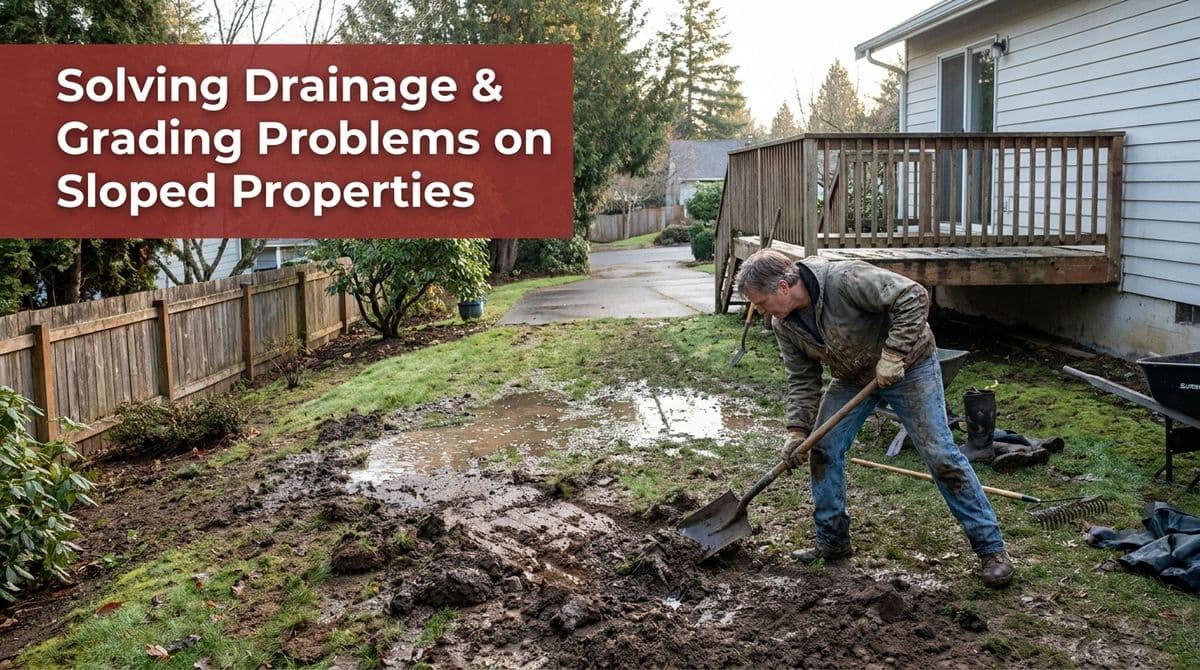
A Sloped Lot, a Flooded Garage, and a Nervous Winter
We recently got a call from a homeowner — let’s call her Melissa — who lives on a beautiful but tricky two-level property. Her place had a lot going for it: views, an outdoor kitchen, stone steps up to the house… but last winter exposed a serious problem.
During heavy rains, water was pooling around her garage, running under the house, and leaving mud stains and discoloration on her rock steps. On top of that, she wanted to upgrade her outdoor kitchen surfaces with something low-maintenance and modern, like microcement.
When we walked her through what was going on, the main culprit was pretty clear: the grading and drainage on her sloped property just weren’t working. If you’re dealing with similar issues — water pooling, garage flooding, or foundation concerns — Melissa’s situation is a textbook example of what to look for and how to fix it.
Why Sloped Properties Are Tricky for Drainage
At first glance, people assume a sloped lot should drain better than a flat one. Water runs downhill, right? The problem is where it ends up and how it gets there.
On Melissa’s property, the upper level shed water downhill… straight toward the garage and the lower part of the house. Over time, small grading issues turned into big headaches:
- Water flowed along the path of least resistance — toward the foundation.
- Low spots near the garage created puddles and eventually sent water inside.
- Unsealed soil around the stone steps washed onto the surfaces, staining them orange-red.
Left alone, these issues can cause foundation movement, slab cracks, mold, and erosion around walkways and steps.
Grading 101: Getting Water to Flow Where You Want It
The first thing we tell homeowners is: your lot should never drain toward your house. Even on a slope, you need intentional grading to direct surface water safely away.
In most cases, we aim for:
- At least 5% slope (about 6 inches of drop over 10 feet) away from the foundation.
- No “birdbaths” — low, flat areas where water can sit more than 24–48 hours after a storm.
- Clear drainage paths that don’t dump water at your garage door or side yard.
On Melissa’s property, that meant rethinking the transition between the upper and lower levels. We planned to regrade key areas so that runoff from the higher yard would be captured and redirected before it ever reached the house.
Smart Drainage Solutions for Sloped Yards
Every property is different, but there are a few drainage tools we reach for again and again on sloped lots:
1. Surface Swales
A swale is a shallow, gently sloped channel that guides water where you want it to go — often along a property line or toward a storm drain or dry well.
On a two-level lot like Melissa’s, a swale between the upper yard and the house can intercept runoff and carry it safely past the garage instead of right into it.
2. French Drains
A French drain is a perforated pipe buried in gravel, wrapped in fabric to keep soil out. It collects water from saturated soil and moves it to a safer discharge point.
We often install these:
- Along the base of slopes that point toward the house.
- Behind retaining walls to relieve hydrostatic pressure.
- Beside garages where water consistently pools.
3. Channel Drains at the Garage
If water is running straight toward your garage — like Melissa’s — a channel drain across the driveway right in front of the door can make a huge difference.
This is a narrow trench with a grate on top that collects surface water and carries it into an underground drain line instead of under the garage door.
Protecting the House: Foundations, Retaining Walls & Steps
Because Melissa’s home sat on two levels, we also talked about how concrete and masonry elements could help control water and protect her investment.
Retaining Walls with Proper Drainage
Retaining walls don’t just hold soil in place — they can also be designed as part of the drainage system. When we build or upgrade walls, we typically include:
- Gravel backfill instead of plain dirt behind the wall.
- Perforated drain pipe at the base to carry water away.
- Weep holes or outlets so water doesn’t build pressure and push the wall over time.
Without these details, a retaining wall can actually trap water against your foundation instead of relieving it.
Steps and Walkways That Don’t Become Mud Magnets
Melissa mentioned her rock steps were stained orange and red from the surrounding dirt. That’s a sign that water and soil are constantly washing over the surface.
Some ways we address that:
- Regrading the soil alongside the steps so it slopes away.
- Adding borders, curbs, or low retaining edges to keep soil off the treads.
- Resurfacing the steps with concrete, stone, or microcement for a sealed, cleanable surface.
Microcement & Outdoor Surfaces: Form Meets Function
Part of Melissa’s call was about her outdoor kitchen: the existing wood was in rough shape, and she was interested in microcement as a fresh, durable finish.
On sloped, exposed properties, microcement can be a smart choice because it’s:
- Seamless — fewer joints for water to penetrate.
- Low maintenance — easy to clean after storms and muddy seasons.
- Customizable — different textures and colors to match steps, patios, or retaining walls.
We always remind homeowners, though: even the best surface finish won’t fix a bigger grading issue. We tackle drainage first, then upgrade finishes so they stay looking good for years.
Signs Your Sloped Property Needs Help
If you’re wondering whether your drainage and grading need attention, watch for these warning signs:
- Water pooling near your foundation or garage after rain.
- Musty smells or dampness in a crawlspace or basement.
- Soil erosion around patios, steps, or retaining walls.
- Standing water that lingers for days in certain areas.
- Staining and mud trails on walkways and steps.
None of these are problems that get better on their own. The sooner you address grading and drainage, the easier (and usually cheaper) it is to correct.
What We Do on an On-Site Visit
When we scheduled a visit with Melissa, we planned to walk the entire property — upper and lower levels — to see:
- Where water is coming from and where it’s trying to go.
- How the existing grading directs or traps runoff.
- Condition of concrete, steps, retaining walls, and any low spots.
From there, we design a plan that may include regrading, drains, retaining walls, and surface upgrades like microcement. The goal is always the same: no more flooded garages, no more water under the house, and a property that works with the slope instead of fighting it.
If your sloped lot is giving you similar headaches, it’s worth having a pro take a look before the next rainy season rolls in.